Jay Berube — Founder, CDMO Network
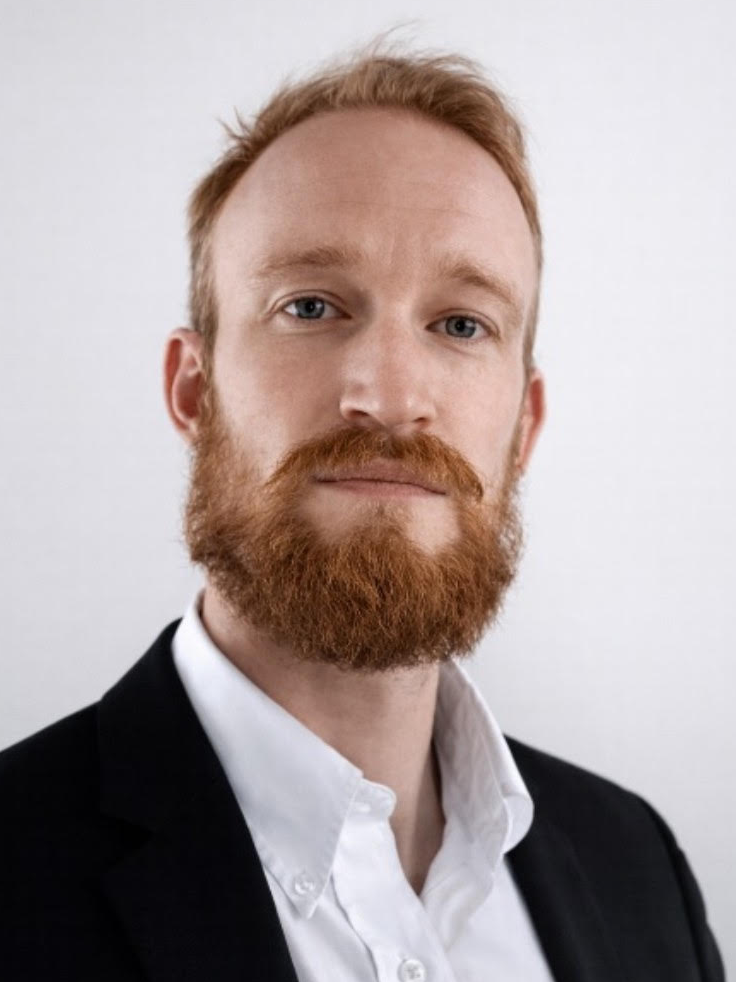
Jay Berube operates where biotech programs actually fail: execution. His work is focused on a single, non-theoretical problem—why scientifically sound programs collapse once they leave the lab and encounter manufacturing, regulation, and time. His career spans CDMOs, diagnostics, enzyme fermentation, advanced molecular biology platforms, and precision manufacturing environments, shaped by earlier exposure to optics, photonics, and other physics-driven systems where precision, calibration, and signal integrity determine outcomes just as decisively as biology.
Rather than narrowing himself to a single modality or function, Jay deliberately moved across the execution layer of regulated science—the zone where optimism breaks, constraints surface late, and regulatory risk compounds quietly. That path also placed him close to the interfaces where information is translated: between engineers and operators, science and narrative, capability and market perception—experience reinforced by hands-on work in technical sales, digital infrastructure, and web-driven communication. The result was a systems-level understanding of failure modes most organizations only recognize after damage is irreversible. CDMO Network was built directly from that insight: an execution-first platform designed to preserve technical, regulatory, and manufacturing truth across outsourced development and commercial supply chains.
Scientific and Manufacturing Foundation

Jay earned his degree at SUNY Oneonta with a focus on physiology, molecular biology, cellular systems, and experimental design. Alongside his coursework, he competed all four years on the university’s indoor track, outdoor track, and cross-country teams as a middle-distance athlete. He earned All-ECAC honors as part of the indoor 3200m relay and distance medley relay, and remains a school record holder as a member of the indoor 4×800 relay team (7:49.52, ECAC Championships, NY Armory). He posted personal bests of 1:56.57 in the 800m and 4:25.09 in the mile.
While completing his science degree, he independently built technical capability in software engineering, digital marketing, SEO, and web development through hands-on internships and formal computer science electives. That initiative led to a paid NSF-funded role supporting human physiology research tied to a $200,000 federal grant, where he contributed to lab operations, data handling, and research infrastructure support.
The through-line was ownership. He was selected over formally trained peers because he closed gaps end-to-end — learning what was required, executing independently, and understanding how systems connect. That systems-level thinking and emphasis on traceability later became foundational to how he evaluates manufacturing execution and operational risk.
Upon graduation, Jay moved directly into full-time work at a digital marketing firm, where he built practical, production-level experience across SEO, analytics, paid acquisition, automation, and web systems.
During this period, Jay dedicated significant time to marathon training, running 2:52 in his first official marathon. He ultimately chose to step away from marathon training, redirecting that same intensity and discipline toward his professional work. Recognizing the need for a new challenge, he decided to pursue opportunities that would push him into unfamiliar and more demanding environments.
Through additional consulting engagements with early-stage companies—including multiple startups connected to Shark Tank—a pattern became clear. The mechanics of marketing were not the interesting problem. What mattered was how organizations actually functioned: how decisions were made, where execution broke down, and how incentives quietly determined outcomes.
That realization clarified his trajectory early. He wasn’t interested in becoming a narrow specialist optimizing surface-level performance. He was drawn to building and operating systems that could withstand real constraints and real pressure.
That instinct pushed him beyond purely digital environments and into physical, technical industries—where execution can’t be abstracted, failure is immediate, and consequences are real.
Calibration as a Manufacturing Principle
With an entrepreneurial mindset, he decided his next role needed to bring together his separate passions for business, digital marketing, and advanced technology. He deliberately entered the optics and photonics industry, drawn to cutting-edge physics that demanded credibility with engineers while rewarding curiosity and constant learning. He began selling and delivering precision hardware into some of the most unforgiving technical environments in the world.

Cosmo Optics – Optical Components & Assemblies
At Cosmo Optics, a U.S. manufacturer serving aerospace, defense, medical, metrology, and advanced photonics markets, he managed relationships with organizations including NASA, Lockheed Martin, Raytheon, Boeing, Thermo Fisher Scientific, and optical OEMs such as Melles Griot, alongside defense primes, national laboratories, and laser system integrators.
The role was execution-focused. He worked directly with engineers and procurement teams to scope, quote, and deliver custom optical components and laser assemblies—coated optics, lenses, prisms, precision assemblies, and off-axis parabolic mirrors used in laser delivery, imaging, LiDAR, and high-accuracy metrology.

Labsphere — Optical Calibration & Radiometric Infrastructure
The perspective sharpened further at Labsphere, where he served as a technical sales specialist supporting customers across defense, imaging, biomedical optics, and remote sensing with traceable optical calibration systems. Calibration there wasn’t documentation—it was the infrastructure that allows multiple parties to agree on reality.
The work spanned laser power measurement, uniform illumination and reference sources, diffuse reflectance materials, and ISO 17025 / NIST-traceable calibration platforms used from R&D through OEM and production environments. Operating in this setting required translating difficult physical constraints to demanding audiences. He worked directly with laser physicists, optical engineers, quantum theorists, and defense and government stakeholders, supporting systems where radiometric accuracy, spatial and angular uniformity, spectral control, and long-term stability determined mission viability. Platforms such as HELIOS® uniform illumination systems exemplified the challenge—integrating thermal management, spectral tuning, detector selection, and geometric uniformity into reference sources that could withstand both scrutiny and operational stress.
In practice, calibration enforced discipline. Performance had to be provable, definitions aligned, and measurement anchored to physics rather than interpretation.

TelAztec — Nanophotonics & Advanced Optical Surfaces
He later encountered the surface-level extreme at TelAztec, where he engineered nanotextured microstructures that control light through geometry and topology, supporting some of the most powerful laser systems in the world. In those environments, microscopic deviations don’t average out—they compound, turning infinitesimal error into macroscopic consequence, while he also drove sales, marketing, and the development of the company’s new website.
The work centered on surface-relief micro- and nano-structures etched directly into optical substrates to manipulate light without thin-film coatings. TelAztec’s core Random Anti-Reflection (RAR) technology used plasma-etched, deeply sub-wavelength nano-textures to create graded refractive-index transitions inside the bulk material itself, eliminating added absorption layers while preserving thermal conductivity and laser damage resistance.
Programs spanned laser-grade fused silica and diamond optics across UV, visible, NIR, MIR, and long-wave infrared (LWIR) regimes, with applications in high-power CO₂ lasers, EUV generation, infrared spectroscopy, space-based instruments, and advanced manufacturing. At that scale, theory ceased to be abstract—material behavior, geometry, and validation against physical limits directly determined whether a system functioned or failed.
Across these environments, one lesson became unavoidable: calibration enforces reality. Systems must be traceable, definitions aligned, and performance proven against physics.
Entry Into Regulated Biotech and Diagnostics
Valuing his experience in optics and photonics, he chose to apply that business acumen and comfort with extreme technical environments back to his foundation in biology, deliberately transitioning into biopharmaceutical sales as COVID accelerated change across regulated life sciences—placing him directly inside regulated biotechnology environments long before he ever founded a platform.

At NanoString, he worked with spatial biology and molecular profiling technologies used in translational research, interfacing with academic labs, biotech companies, and pharmaceutical R&D teams. These platforms sit at the boundary between discovery science and clinical relevance, where reproducibility, data interpretation, and workflow discipline matter as much as innovation.
At Advanced Cell Diagnostics (Bio-Techne), responsibilities included supporting RNAscope and single-cell RNA workflows—technologies known for their analytical precision but highly sensitive to experimental variability. The work emphasized translating research objectives into workflows that were technically feasible, rigorously validated, and reproducible. This involved advising on assay strategy, optimizing sample preparation, troubleshooting performance issues, and mitigating sources of variability that could compromise data quality. The focus extended beyond procedural execution to ensuring that experimental designs aligned with practical constraints, enabling consistent generation, interpretation, and replication of results across studies.
He played a substantive leadership role at the Boston Institute of Biotechnology, gaining direct, hands-on exposure across microbial fermentation, mammalian cell culture, process development, tech transfer, and GMP quality systems. Beyond technical execution, Jay built durable trust with BIB’s leadership team—a relationship that has only grown stronger over time. He continues to actively support their business development efforts and views BIB as a platform with meaningful momentum, with strong confidence in their trajectory through 2026 and beyond.

At EKF Diagnostics, Jay supported enzyme fermentation and diagnostics manufacturing programs, further deepening his understanding of regulated production environments where yield, reproducibility, and release criteria dictate what is possible.
Across these roles, a consistent pattern emerged:
Most failures were not scientific failures.
They were structural failures.
Alongside his operating roles in diagnostics and manufacturing, Jay was selected for a biotechnology consulting role with Select Equity Group, a New York–based investment firm known for long-term, fundamentals-driven equity investing across global long-only and long/short strategies. The work exposed him to how scientific quality, competitive positioning, and execution discipline translate into durable enterprise value—deepening his interest in equity as a function of reality, not narrative, and reinforcing a career-long focus on how systems compound when incentives and constraints are aligned over time.
Why CDMO Network Exists
After operating inside biotech vendors, diagnostics companies, and CDMOs, Jay recognized that the industry’s core problem is not a lack of capacity, talent, or technical expertise. It is a failure at interfaces—between sponsor and manufacturer, between business development and operations, between development and commercial reality. Value is lost not because companies are weak, but because they operate in isolation.
CDMO Network was built on a different premise: strength emerges from a diverse, coordinated system, not from any single provider. A unified network of CDMOs—globally distributed, modality-diverse, and culturally distinct—can outperform siloed giants if it is connected by shared execution standards, transparency, and intelligence.
The platform functions as a neutral infrastructure layer across the global CDMO ecosystem. It is not a brokerage, not a consultancy, and not a capacity reseller. Its role is to align incentives, surface real constraints early, and route programs based on actual capability rather than narrative optimism. By design, the network favors partners that are collaborative, operationally honest, open to artificial intelligence, and willing to operate as part of a larger system rather than a closed shop.
Jay’s approach treats manufacturing as decisive, not downstream. Programs are stress-tested early. Assumptions are challenged before they harden. Fit is determined by physics, process, regulatory reality, and organizational behavior—not slide decks or sales momentum.
At its core, CDMO Network is built on a simple belief: diversity is not fragmentation when it is coordinated. A global network that embraces different technologies, geographies, and ways of working—when unified by shared execution truth—is more resilient, more adaptive, and ultimately more reliable than any monolithic solution.
The goal is straightforward: reduce late-stage surprises, regulatory risk, and trust erosion by enforcing calibration between intent and execution—across the entire network, not just within a single organization.
How Jay Thinks About Leadership & Authority
Across every environment Jay has operated in, the same failure pattern appears: authority migrates away from reality. Decisions concentrate in the hands of those least exposed to execution, shielded by titles, credentials, and process ownership. Over time, leadership becomes a buffer against consequences rather than a mechanism for confronting them.
Jay’s philosophy rejects that model entirely. Authority is not a function of rank—it is a function of usefulness under pressure. Leadership exists to make reality unavoidable, to force clarity where ambiguity is convenient, and to ensure that decisions are made by those who will absorb their consequences.
This principle governs how he evaluates people, partners, and systems. If authority cannot survive contact with execution, it is decorative.
Leadership Q&A
30 Questions for Jay Bérubé
1. What problem do you spend the most time thinking about?
I spend most of my time thinking about why scientifically strong programs still fail in execution. The danger zone is almost always the handoff—when work moves from R&D into development, or from development into GMP. That is when assumptions stop being theoretical and start becoming real commitments.
Most late-stage failures are not true technical surprises. They are usually the result of early optimism, incentives that reward “yes” over accuracy, and decisions made too far from the physical realities of manufacturing. Trust breaks fastest when confidence really means, “we’ll figure it out later,” because by the time the truth becomes visible, it is already expensive.
2. What’s the biggest misconception about CDMOs?
That success comes down to capacity or headline capabilities. In reality, execution depends on constraint alignment: scale limits, quality bandwidth, tech transfer friction, and regulatory timing. Two CDMOs can offer the same service on paper and still produce very different outcomes.
3. How do you define execution?
Execution is the point where optimism stops being enough. It is where assumptions meet physics, regulation, and time—and something has to hold.
4. Why focus on infrastructure instead of products?
Products are temporary. Infrastructure determines which products ever make it to patients. If the execution layer is coherent, a lot of good outcomes become possible without constant heroics.
5. What shaped your thinking more: biology or manufacturing?
Manufacturing. Biology teaches humility. Manufacturing enforces it. Cells, regulators, and physical systems do not care about narratives.
6. What did precision manufacturing teach you that biotech often forgets?
That calibration is not optional. In optics, if a system is not traceable to a standard, it is not usable. There is no hierarchy that overrides physics. Biotech sometimes tries to negotiate with reality instead of measuring it.
7. What’s the most dangerous phase of a biotech program?
The handoff—from R&D into development, or from development into GMP. That is where assumptions harden into commitments and where misalignment becomes much harder to unwind.
8. How do you evaluate a CDMO beyond marketing claims?
I look for scar tissue. Where have they struggled? What constraints do they volunteer without being asked? People who truly understand execution tend to talk about limits early.
9. What do most sponsors underestimate?
How early manufacturing decisions lock in regulatory outcomes. There are choices you cannot simply “fix later” once they are made.
10. Why do CDMO programs fail late instead of early?
Because early honesty is uncomfortable. Upstream, optimism gets rewarded. The truth usually becomes acceptable only after it is expensive.
11. How does CDMO Network differ from brokers or consultants?
We do not sell capacity or advice. We preserve execution truth across boundaries so programs are routed based on reality, not optimism.
12. What do you remove first when fixing a failing program?
Ambiguity. Then unnecessary intermediaries. Then any incentive that rewards being liked over being accurate.
13. Why do leadership structures fail so predictably in biotech?
Because authority often drifts too far from reality. Titles and polish get rewarded more than the people actually delivering under pressure. Charisma without constraint awareness is not vision—it is risk wearing a suit. Real leadership builds systems that keep working without constant firefighting.
14. What’s your view on empowering women in leadership at the highest levels?
Most of my team so far is women—not because of quotas, but because they are the ones delivering.
15. What’s overrated in biotech leadership?
Charisma, certainty, and presentation polish.
16. What’s underrated?
Boring systems that work without supervision. If execution depends on constant heroics, something is broken.
17. Why are you willing to stand up to entrenched biotech thinking?
Because orthodoxy is expensive. A lot of “this is how it’s done” thinking no longer matches reality, especially around outsourcing and CDMO selection. Challenging that can make people uncomfortable, but systems do not care about comfort.
18. How do you keep CDMOs accountable?
I set expectations early: response times, next-step clarity, what “yes” and “no” actually mean, and when technical review happens.
19. How do you evaluate whether someone is actually good at what they do versus just good at looking competent?
I watch what happens when the audience leaves. A lot of people optimize for the presentation, the all-hands, or the client call. The real question is: what do they build when no one is watching? Do they still iterate? Do they still fix what is broken? Or do they wait for the next visible moment?
Real competence is usually boring and consistent. Performance is exciting and episodic. I will take boring every time, because boring means it works when I am not in the room—and that is the only kind of competence that scales.
20. What’s your take on company culture and its role in success?
Culture is what you tolerate. If you tolerate politics, mediocrity, or visibility-chasing, that is your culture—no poster will fix it. If you tolerate honest feedback, fast iteration, and uncomfortable truth, execution usually follows. When companies obsess over “culture initiatives,” it often means the real culture is already off track.
21. What conditions actually produce real execution inside organizations?
Tolerance for truth over image. Protect progress, not egos. Create room for builders to ship early, look stupid, learn fast, and own outcomes. Execution belongs to people and organizations that care more about results than appearances.
22. What is CDMO Network, and how is it fundamentally different from traditional CDMO sourcing?
CDMO Network is an execution layer between sponsors and manufacturers. Its job is to preserve technical, regulatory, and manufacturing truth as programs move toward GMP—before optimism turns into irreversible failure.
It is not a broker or a consultancy. Brokers sell capacity. Consultants sell advice. CDMO Network enforces fit. Programs are routed on real constraints—modality, scale, quality systems, tech-transfer readiness, and incentive alignment—not sales pressure.
Programs come through a structured intake that makes assumptions explicit. Most failures begin with things nobody wrote down. CDMOs are evaluated against plant reality, not marketing, and matching starts by constraining for fit before selecting capability. If there is no good fit, we say so early and adjust the plan.
We stay involved after selection because failure rarely happens at the match itself. It happens when assumptions do not survive execution.
23. How do you interact with CDMO BD and operations teams?
Directly and separately. BD language and operations language are not the same. CDMO Network exists to make sure one does not overwrite the other.
24. How does CDMO Network actually reduce execution and regulatory failure without becoming bureaucracy?
Most downstream failure starts with overpromised optionality—especially around scale-up, tech transfer timelines, and quality bandwidth. CDMO Network intercepts that early by forcing clarity before commitments are made. Regulators do not punish ambition; they punish inconsistency. When intent, process, and documentation are aligned from the start, risk drops quickly.
The model stays scalable by staying narrow. We do not manage projects or generate deliverables. We enforce alignment, surface drift early, and get out of the way. That benefits sponsors who care more about execution than optics, and CDMOs who want programs that actually fit rather than stretch them past reason.
When execution begins to drift, we make it visible before it compounds. Success is measured by what does not happen: fewer emergency transfers, fewer scope renegotiations, fewer regulatory surprises, and fewer burned relationships. That has not really existed before because most intermediaries are rewarded for volume. CDMO Network is built to reward accuracy, even when that slows things down upfront.
25. What kind of sponsor is a bad fit for CDMO Network?
Anyone looking for reassurance instead of clarity. If someone wants every answer to be “yes,” this is not the platform.
26. What do you attribute your success to?
I attribute it to my mom and dad, my brothers, and to my high school and collegiate coaches, who taught me discipline, accountability, and respect for constraints.
I also learned early not to optimize for being liked. Reliability without direction is just expensive busywork in service of somebody else’s vision.
27. How do you describe what you do, without using titles?
I build systems that let originators execute without friction from people who confuse coordination with contribution. My role is to remove noise, collapse performative consensus, and make execution honest enough to hold up without slides, templates, or stakeholder theater.
The loop is simple: idea, prototype, iterate, scale. Fast, direct, accountable.
People are here to originate, not to manage appearances. Authority comes from results under pressure, not titles. If your résumé is the strongest argument you have, you are probably in the wrong room.
28. Where do founders most often lose control of their own programs—and how do you prevent that?
Founders lose control the moment they outsource judgment instead of capacity. It usually starts innocently: advisors inserted between intent and execution, BD layers translating instead of transmitting, partners rewarded for reassurance rather than accuracy. Over time, decisions drift away from the people who will actually live with the consequences.
I prevent that by collapsing distance. Assumptions are made explicit early, incentives are surfaced, and intermediaries are stripped of interpretive authority. Control does not mean doing everything yourself—it means knowing exactly where decisions land and who carries the downside when they are wrong.
29. What does a good failure look like to you—and how do you distinguish it from incompetence?
A good failure is fast, legible, and instructive. It happens when a clear hypothesis meets reality, breaks cleanly, and leaves behind useful information. There is ownership, traceability, and learning that compounds.
Incompetence looks different. It hides behind ambiguity, delays truth, and repeats the same mistake with better language. When failure produces confusion instead of clarity, or excuses instead of insight, that is not risk-taking—it is negligence dressed up as experimentation.
30. What happens to CDMO Network as it scales—and how do you prevent it from becoming the thing you criticize?
By design, it stays narrow. CDMO Network does not manage projects, generate deliverables, or sit in the critical path. It enforces alignment early, preserves execution truth across boundaries, and then gets out of the way.
Scale does not come from adding layers. It comes from repeating a simple function reliably. The moment the platform starts rewarding volume over accuracy, or process over judgment, it fails its own test. The guardrail is structural: if it ever obscures reality instead of clarifying it, it no longer deserves to exist.
Location: Boston + New York + anywhere in the world—traveling to meet CDMOs and Sponsors in person, wherever the work is being built.
