Synthetic Biology CDMO Services
Synthetic biology changes development because the product is not only a molecule.
It may be a genetic circuit.
A programmed cell.
A regulated microbial system.
A biologic factory.
A living therapeutic.
A platform designed to sense, compute, respond, and produce.
That changes the manufacturing problem.
A standard CDMO model is built around defined outputs: a protein, plasmid, viral vector, antibody, enzyme, RNA, or cell product. Synthetic biology often begins earlier than that. The question is not only how to manufacture the product. The question is whether the biological system itself can be designed, stabilised, measured, transferred, scaled, and controlled.
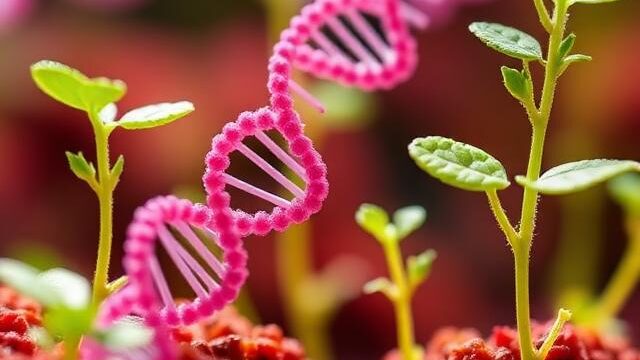
Synthetic biology CDMO services must therefore connect design logic with manufacturing logic. A genetic design that works in a small academic assay may not survive process transfer. A microbial strain that performs well in shake flasks may lose productivity at scale. A gene circuit that behaves cleanly in one host may drift, silence, mutate, burden the cell, or respond unpredictably under GMP conditions.
CDMO Network supports synthetic biology programmes across strain engineering, pathway construction, genetic circuit development, host selection, expression optimisation, bioprocess development, analytical strategy, tech transfer, and GMP manufacturing.
The work is not simply to build biology.
The work is to make biology behave predictably.
Biologie wird entworfen. Herstellung macht sie verlässlich.
Synthetic biology turns biology into an operating system
Synthetic biology uses biological parts to create programmable systems.
Those systems may be designed to produce therapeutic molecules, regulate gene expression, control cellular behaviour, manufacture complex materials, sense disease signals, deliver payloads, or create living medicines.
This makes synthetic biology different from conventional biologics development. In a conventional biologic, the biological system is often a production tool. In synthetic biology, the biological system may be the product, the factory, the delivery mechanism, or all three.
That distinction matters.
If the system is only a production host, the main goal is output: titre, purity, productivity, and consistency. If the system is therapeutic, the goal becomes broader: function, containment, responsiveness, safety, stability, and control. If the system is a platform, the goal is repeatability across multiple products.
A synthetic biology CDMO programme must define which role biology is playing.
Is the cell producing the product?
Is the cell the product?
Is the circuit the product?
Is the system a manufacturing platform?
Is the biological programme intended to operate inside the patient?
Is it intended to operate only inside a bioreactor?
Each answer changes development.
The design-build-test-learn cycle must connect to GMP reality
Synthetic biology is often described through design-build-test-learn cycles.
That model is useful. But it is incomplete unless manufacturing constraints are present from the beginning.
A design may be elegant but unstable.
A construct may be functional but impossible to scale.
A circuit may work but generate too much metabolic burden.
A pathway may produce the desired molecule but also create toxic intermediates.
A host may be genetically tractable but unsuitable for GMP production.
A chassis may be attractive scientifically but weak commercially.
CDMO Network treats design-build-test-learn as a manufacturing-connected system.
Design must consider manufacturability.
Build must consider transferability.
Testing must include product quality and process behaviour.
Learning must feed into scale-up, analytics, and regulatory strategy.
This is how synthetic biology moves from experimental promise to executable programme.
Host selection is a strategic decision
The host organism shapes the entire programme.
Synthetic biology platforms may use bacteria, yeast, mammalian cells, insect cells, plant cells, cell-free systems, engineered consortia, or specialised microbial chassis. Each system creates different advantages and constraints.
Bacterial systems can support rapid engineering, high-density fermentation, and strong scalability. Yeast systems can support eukaryotic processing, secretion, and industrial robustness. Mammalian systems may be needed for complex proteins, therapeutic cell engineering, or human-compatible function. Cell-free systems can remove cellular constraints and support rapid prototyping or specialised production.
The correct host is not the easiest host.
It is the host that fits the biological function and the manufacturing path.
A strain that is simple to engineer may not be stable enough.
A system with high expression may not produce the correct form.
A host with attractive biology may not have a mature GMP supply chain.
A promising platform may require containment, release testing, and safety controls that slow development.
CDMO Network supports host and chassis routing based on programme biology, not default vendor preference.
Genetic stability is a core quality attribute
Synthetic biology programmes often fail because engineered systems change.
Cells evolve.
Plasmids are lost.
Pathways mutate.
Promoters silence.
Circuit behaviour drifts.
Selective pressure reshapes the system.
A programme that depends on engineered function must prove that the function remains stable across passages, production runs, storage, and scale.
Genetic stability is not a late-stage detail. It is a central quality attribute.
For microbial production platforms, this may mean confirming plasmid retention, pathway integrity, copy number consistency, and productivity over generations. For engineered cell systems, it may mean evaluating integration sites, expression persistence, phenotype stability, and functional durability. For therapeutic living systems, stability must be connected to safety and clinical performance.
CDMO Network helps build stability testing into the development architecture early.
The goal is not only to confirm that the construct was built correctly.
The goal is to confirm that the construct remains correct when biology is under pressure.
Genetic circuits require functional manufacturing control
Gene circuits are not ordinary expression constructs.
They may include sensors, switches, feedback loops, logic gates, kill switches, inducible systems, repressors, activators, RNA regulators, or multi-input response systems. These circuits must be manufactured as functional systems, not just sequenced DNA.
A circuit can be genetically correct and functionally weak.
A circuit can function in small format and fail at production scale.
A circuit can respond correctly in one environment and incorrectly in another.
This creates a manufacturing challenge.
The process must preserve the circuit’s operating behaviour. The analytics must measure more than identity. They must measure response.
For inducible systems, the programme must define activation thresholds, expression kinetics, leakiness, dynamic range, and reversibility. For logic circuits, the programme must define input specificity and output fidelity. For safety switches, the programme must define activation reliability under relevant conditions.
A synthetic biology CDMO strategy must treat circuit behaviour as product behaviour.
Pathway engineering must balance productivity and burden
Many synthetic biology programmes use engineered pathways to produce complex molecules.
This may include enzymes, metabolites, peptides, biologic precursors, nucleic acid components, biomaterials, or difficult-to-produce intermediates.
The central challenge is balance.
Increasing expression of one enzyme may create bottlenecks elsewhere. Redirecting metabolic flux may slow growth. Producing the desired molecule may generate toxic intermediates. Improving titre may reduce robustness. Improving robustness may reduce yield.
Pathway engineering is therefore not only genetic construction. It is system balancing.
The key variables include promoter strength, ribosome binding sites, codon usage, enzyme ratios, compartmentalisation, precursor supply, cofactor availability, oxygen transfer, nutrient strategy, and harvest timing.
CDMO Network supports pathway development as a linked design and bioprocess problem.
The pathway must produce.
The cell must survive.
The process must scale.
The product must meet specification.
Fermentation and bioprocess development define commercial feasibility
Synthetic biology often looks strongest at small scale.
The real test begins when the system is moved into controlled bioprocess conditions.
Fermentation parameters can alter expression, metabolism, growth rate, product quality, impurity profile, and stability. Temperature, pH, dissolved oxygen, feed strategy, induction timing, media composition, antifoam, shear, and harvest window can all affect engineered biology.
For microbial systems, high-density growth may amplify genetic instability or metabolic burden. For yeast systems, oxygen demand and secretion behaviour may become limiting. For mammalian systems, engineered functions may respond to stress, media shifts, or cell density in unexpected ways.
A synthetic biology CDMO programme must therefore integrate strain engineering and process development.

A strong strain is not enough.
A strong process is not enough.
The strain-process pair must be stable.
Downstream processing must match biological complexity
Synthetic biology products can create complex downstream profiles.
The product may be secreted, intracellular, membrane-associated, particle-associated, encapsulated, conjugated, or produced as part of a larger biological assembly. The impurity profile may include host-cell proteins, nucleic acids, endotoxin, media components, metabolic byproducts, aggregates, incomplete products, or related species.
For living systems, downstream processing may include concentration, washing, formulation, preservation, containment, and viability control rather than traditional purification.
The downstream strategy must be built around the true product form.
A soluble enzyme needs one process logic.
A programmed live biotherapeutic needs another.
A biomaterial-producing cell system needs another.
A synthetic biology platform producing a complex biologic precursor may require hybrid purification.
CDMO Network routes downstream development based on structure, function, impurity burden, and clinical use.
Analytics must measure identity, function, and control
Synthetic biology analytics must answer several questions at once.
Was the system built correctly?
Does it produce the correct output?
Does it respond correctly?
Does it remain stable?
Does it create unwanted species?
Does it behave consistently across scale?
Can the function be released under GMP?
Useful analytical methods may include sequencing, qPCR, ddPCR, flow cytometry, LC-MS, HPLC, ELISA, western blotting, enzyme assays, metabolomics, transcript analysis, proteomics, potency assays, residual DNA testing, host-cell protein assays, endotoxin testing, sterility testing, viability assays, and functional response assays.
For synthetic biology, orthogonal analytics are essential.
Sequence confirms construction.
Expression confirms output.
Function confirms behaviour.
Stability confirms durability.
Potency confirms biological relevance.
No single assay is enough.
Potency must reflect the engineered function
Potency is difficult in synthetic biology because function can be multi-layered.
A programmed cell may need to sense a disease marker, activate a circuit, produce a therapeutic payload, and shut itself down. A microbial therapeutic may need to survive transit, colonise transiently, express locally, and avoid systemic exposure. A synthetic pathway product may need the correct structure and biological activity. A gene circuit may need to respond within a defined threshold.
Potency must reflect the mechanism.
For a sensor-driven system, potency may involve input-response testing.
For a kill-switch system, potency may involve activation reliability.
For a metabolic production system, potency may involve product activity and impurity control.
For a living therapeutic, potency may involve viability, expression, localisation, and functional output.
CDMO Network supports potency strategy early because weak potency design becomes a late-stage bottleneck.
A synthetic biology product cannot rely only on identity testing.
It must prove that the programmed function still works.
Containment and safety must be engineered into the platform
Synthetic biology raises safety questions that must be addressed directly.
Engineered systems may require biological containment, genetic safeguards, kill switches, auxotrophy, environmental control, replication limits, or release prevention. These are not optional add-ons for many programmes. They are part of the product architecture.
For manufacturing, containment affects facility selection, cleaning strategy, waste handling, operator safety, environmental monitoring, and regulatory documentation.
For therapeutic use, containment affects biodistribution, persistence, shedding, reversibility, and clinical monitoring.
A strong synthetic biology CDMO strategy does not treat containment as a compliance burden. It treats containment as an engineering requirement.
The system must do what it is designed to do.
It must also not do what it is designed to avoid.
GMP translation requires disciplined documentation
Synthetic biology programmes often begin in research environments where design history is fragmented.
Construct versions, host lineage, sequence changes, plasmid maps, selection conditions, assay formats, culture methods, and process notes may be distributed across notebooks, files, academic collaborators, CROs, and early vendors.
That creates risk during CDMO transfer.
GMP translation requires a clean technical package. This may include construct maps, sequence confirmation, host history, cell bank or strain bank documentation, raw material lists, analytical methods, process parameters, development reports, comparability data, and risk assessments.
CDMO Network helps structure synthetic biology programmes so that technical history becomes transferable.
The goal is not more documentation.
The goal is usable documentation.
Scale-up changes the behaviour of engineered biology
Scale-up is not neutral.
Biology responds to the environment. Engineered biology may respond even more strongly.
At larger scale, mixing, oxygen transfer, gradients, shear, temperature control, feed dynamics, induction timing, and harvest logistics can all affect function. In a small vessel, the system may experience uniform conditions. In a large bioreactor, local microenvironments may change circuit activation, pathway flux, stress response, or product quality.
That is why synthetic biology scale-up must be staged.
Small-scale success should be connected to scale-down models, engineering runs, comparability testing, and controlled process changes. The programme must identify which variables affect engineered function and which can be adjusted safely.
CDMO Network supports scale-up planning across development, pilot, clinical, and commercial stages.
The point is not simply larger volume.
The point is preserved function at larger volume.
Technology transfer must protect the design logic
Synthetic biology tech transfer is often more fragile than standard biologics transfer.
The receiving site must understand not only the process steps, but the logic behind the engineered system. Why was this promoter used? Why this host? Why this induction window? Why this temperature shift? Why this media composition? Why this passage limit? Why this containment strategy?
Without that logic, transfer becomes mechanical.
Mechanical transfer is risky when biology is programmed.
CDMO Network structures transfer around the system’s operating principles. The manufacturing partner must understand the design rationale, critical parameters, quality attributes, failure modes, and control strategy.
This is how transfer becomes execution rather than repetition.
Niche capability: engineered microbial production platforms
Engineered microbes are among the most important tools in synthetic biology.
They can produce proteins, enzymes, peptides, metabolites, nucleic acid components, biomaterials, and complex intermediates. They can also serve as therapeutic systems in microbiome, oncology, metabolic disease, and immune applications.
The challenge is different depending on use.
A microbial production platform must optimise yield, purity, stability, and scalability.
A live microbial therapeutic must optimise viability, function, safety, containment, and delivery.
A microbial consortium must optimise population balance and interspecies behaviour.
CDMO Network supports microbial synthetic biology programmes where strain engineering, fermentation, analytics, and GMP execution must be coordinated.
The microbe is not just a host.
It is a system under selection pressure.
Niche capability: programmable cell systems
Programmable cells are a major synthetic biology frontier.
Cells can be engineered to sense signals, execute logic, secrete therapeutic molecules, remodel tissue environments, regulate immune activity, or respond to disease states.
These programmes overlap with cell therapy, gene therapy, regenerative medicine, immune engineering, and living therapeutics.
Manufacturing programmable cells requires control over engineering efficiency, phenotype, viability, potency, expansion, persistence, and safety. For complex circuits, the programme must also evaluate input-output behaviour and failure modes.
A standard cell therapy workflow may not be enough.
Programmable cell systems require manufacturing strategies that preserve the biological programme during expansion, processing, storage, and administration.
Niche capability: synthetic biology for biologic production
Synthetic biology can improve how biologics are made.
Engineered hosts can increase productivity, improve folding, modify glycosylation, enhance secretion, reduce impurities, or produce difficult molecules. Pathway and chassis engineering can support next-generation enzymes, antibody fragments, cytokines, fusion proteins, peptides, and complex biologic intermediates.
This creates value when conventional expression systems struggle.
But improved production biology must still fit GMP reality. Engineered production hosts require bank characterization, genetic stability testing, process control, impurity analysis, and comparability strategy.
CDMO Network supports synthetic biology-enabled biologic production by connecting host engineering to manufacturing execution.
Better biology only matters if it becomes a better process.
Niche capability: biosensors and responsive therapeutic systems
Responsive systems are a defining feature of synthetic biology.
These may include cells or circuits designed to respond to disease-associated signals, metabolites, inflammatory markers, tumour microenvironment features, or external triggers.
A responsive therapeutic system must be evaluated for sensitivity, specificity, timing, magnitude, reversibility, and safety. It must respond when it should. It must remain silent when it should not respond.
This creates a unique analytical burden.
The programme must define relevant inputs, physiological ranges, activation thresholds, output levels, and off-target activation risks.
CDMO Network supports responsive synthetic biology platforms where design, assay development, and manufacturing control must be aligned.
Niche capability: synthetic biology and advanced materials
Synthetic biology is increasingly used to create programmable biomaterials.
Cells can be engineered to produce structural proteins, extracellular matrices, hydrogels, adhesive proteins, polymers, or responsive materials. These products may be used in regenerative medicine, tissue engineering, delivery systems, wound healing, implants, or industrial biomanufacturing.
This creates hybrid requirements.

The product may need biological characterization and material characterization. It may require assays for composition, mechanical properties, degradation, biocompatibility, sterility, and functional performance.
A biomaterial produced through synthetic biology is not just a material.
It is a manufactured biological output.
CDMO Network supports these programmes through integrated routing across biologics, biomaterials, fermentation, purification, analytics, and GMP planning.
Regulatory strategy must be built around product identity
Synthetic biology products may sit between established categories.
They may resemble biologics, live biotherapeutics, cell therapies, gene therapies, vaccines, enzymes, devices, combination products, or advanced therapy medicinal products. Some products do not fit cleanly into one category.
This makes early regulatory classification important.
The development plan must define product identity, mechanism of action, manufacturing control, release strategy, safety testing, comparability, and clinical risk. For living systems, regulators may focus closely on persistence, shedding, genetic stability, containment, and environmental risk. For engineered production systems, the focus may be product consistency, host-derived impurities, and process control.
CDMO Network helps align CDMO selection with regulatory pathway.
The wrong manufacturing partner can create regulatory drag.
The right partner builds the evidence package from the start.
Requirements for high-quality synthetic biology CDMO services
High-quality synthetic biology CDMO services require integration across design, host selection, genetic construction, strain or cell engineering, process development, analytics, potency, safety, and GMP manufacturing.
The right CDMO model must support:
- Host and chassis selection
- Construct design and optimisation
- Genetic circuit development
- Pathway engineering
- Strain or cell line development
- Fermentation and culture development
- Scale-up and scale-down modelling
- Stability testing
- Potency assay development
- Containment and safety strategy
- Downstream processing
- GMP transfer and manufacturing
- Regulatory documentation
The strongest programmes do not separate engineering from manufacturing.
They connect them.
Common failure points in synthetic biology programmes
Synthetic biology programmes often fail through predictable patterns.
The construct works but is unstable.
The host grows but loses productivity.
The pathway produces but creates toxic burden.
The circuit responds but leaks.
The assay measures expression but not function.
The process scales but changes behaviour.
The CDMO can manufacture but does not understand the system.
The technical package describes the parts but not the logic.
These failures are avoidable when the programme is designed as a system.
CDMO Network reduces these risks by matching synthetic biology programmes to partners with the right technical fit, platform experience, analytical depth, and GMP pathway.
Not every CDMO should handle synthetic biology.
Not every synthetic biology programme needs the same CDMO.
Routing matters.
Who synthetic biology CDMO services support
Synthetic biology CDMO services are relevant for many groups.
Biotech companies developing engineered therapeutic platforms need manufacturing paths that can support early proof-of-concept and clinical translation.
Pharmaceutical companies exploring platform biology need partners that can move beyond standard biologics workflows.
Academic spinouts need help turning design logic into transferable process logic.
Investors need confidence that the platform can move from laboratory function to manufacturable product.
CDMOs need clear programme definition before accepting complex work that may not fit standard unit operations.
CDMO Network functions as the coordination layer between these needs.
The result is not more vendor activity.
It is better technical alignment.
How CDMO Network supports synthetic biology programmes
CDMO Network does not treat synthetic biology as a generic outsourcing category.
It evaluates the system first.
What is being engineered?
What is the host?
What is the intended function?
What must remain stable?
What must be measured?
What scale is needed?
What regulatory category is likely?
What CDMO capabilities are required?
From there, the programme can be routed to the right combination of development, analytical, manufacturing, and regulatory partners.
This may involve one CDMO.
It may involve several specialised partners.
It may require phased routing from design support to pilot production to GMP manufacturing.
The structure depends on the programme.
A more exact model for synthetic biology CDMO services
Synthetic biology succeeds when design becomes controlled function.
That is the core manufacturing challenge.
A genetic system that works once is not enough.
A programmed cell that behaves in one assay is not enough.
A strain that produces at bench scale is not enough.
A pathway that generates product without process control is not enough.
The system must be buildable, testable, stable, scalable, transferable, and regulatable.
Synthetic biology CDMO services exist to make that possible.
CDMO Network supports this by connecting engineered biology to the right manufacturing architecture. The aim is not simply to outsource tasks. The aim is to preserve the logic of the biological design while building the process required to manufacture it.
The design gives biology intent.
The process gives intent control.
The network gives the programme a path.